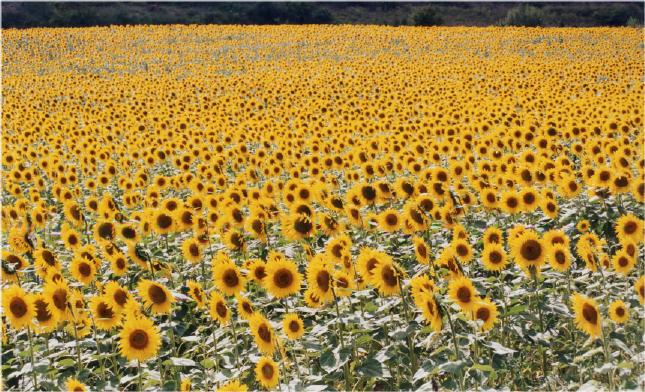
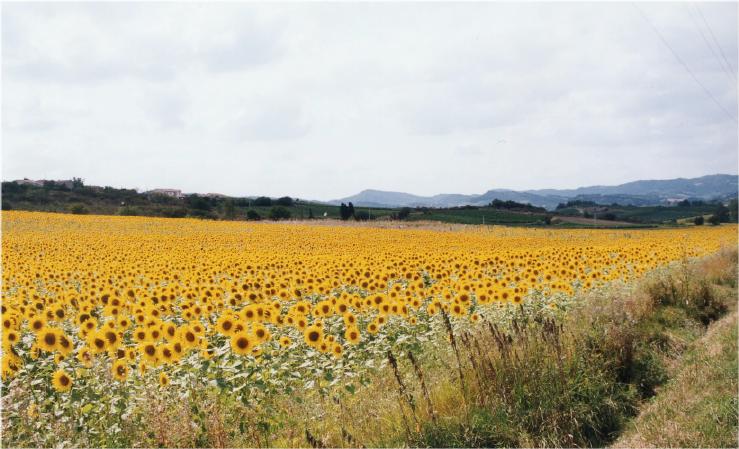
We will never be able to
think of sunflowers again without
remembering these spectacular
fields, all over the place in the Languedoc.
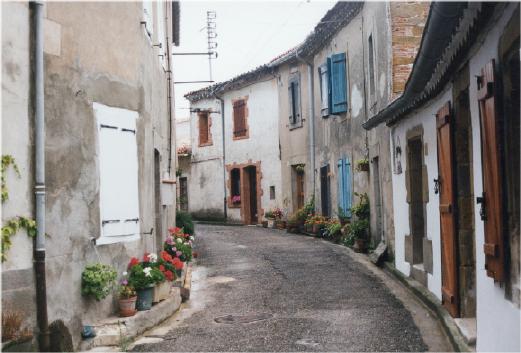
Rue Ancienne, the street
where we stayed for a week in
tiny Escueillens,
France
(halfway between Toulouse
and Narbonne,
or between Limoux and Mirepoix
if you know the area)
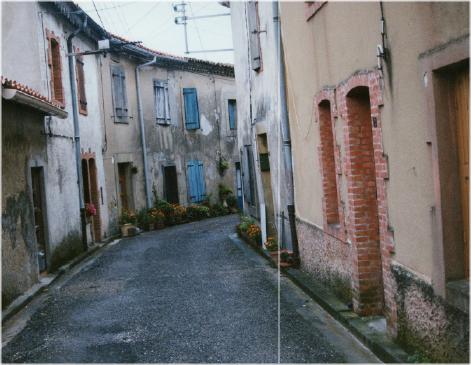
Looking the other way down
the Rue Ancienne. The houses here are about 200 years old.
The village dates from the
Roman era; it's about 2,000 years old.
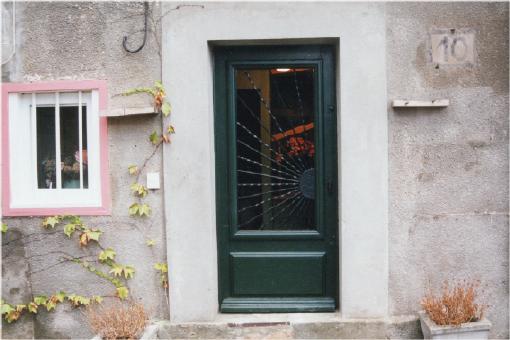
The front door of #10, where
we were very comfortable.
The house is owned by an
American woman and the rent is very affordable.
Our British-born agents
manage many properties in the region.
Much cheaper than a hotel,
highly recommended.
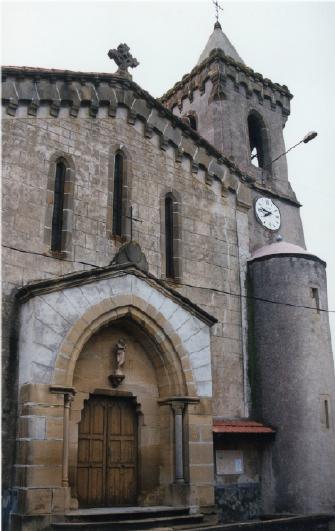
The village church. Its
bell rang out every hour (twice, for some reason) and half-hour from 6
a.m. until midnight.
Apart from that bell, Escueillens
was the quietest place we had ever been.
The village is too small
(population maybe 100) to support a fulltime priest,
so the church is open only
one Sunday a month.
It happened to be open the
week we were there; there were only a handful of people inside.
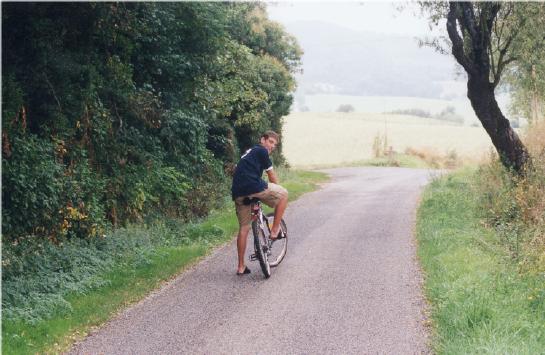
Tim just outside the village
proper, on the house bike.
The kids found certain places
where you could catch a cell phone signal
(and a beautiful view to
go with it!)
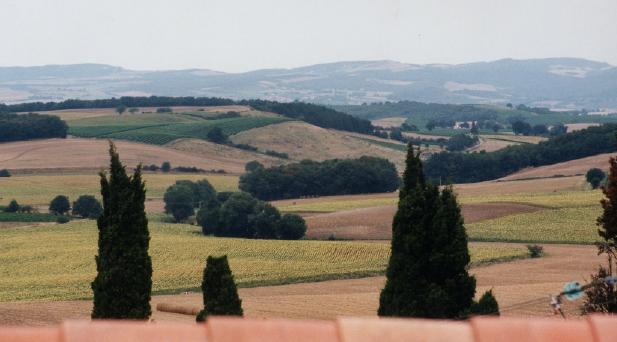
This was the view from our
bedroom in Escueillens.
Rolling hills, sunflower
fields, grape orchards and cypress trees.
Here's a recent article
from the Guardian U.K. on the history of this region, which is west
of Provence.
The Languedoc was the home
of the Cathars (from the Greek katharos, meaning pure, the
root of our word catharsis).
The Cathars were a heretical
sect; they decried the materialism and warmongering of the medieval Catholic
Church.
Of course they were brutally
extinguished by Rome.More on the Cathars from the British Library here,
or read the book I read
while in Cathar country, Chasing
the Heretics.
.
![]() |
![]() |
![]() |
![]() |
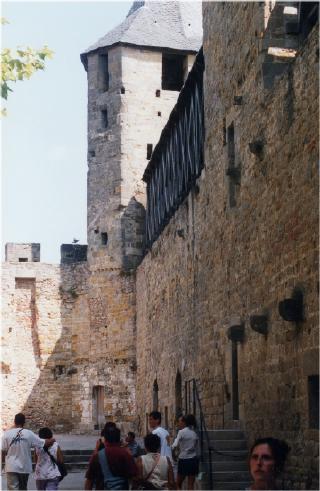
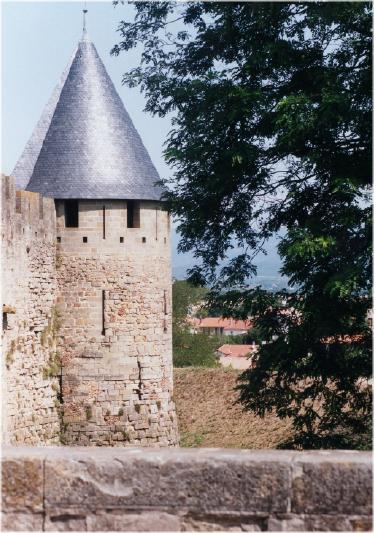
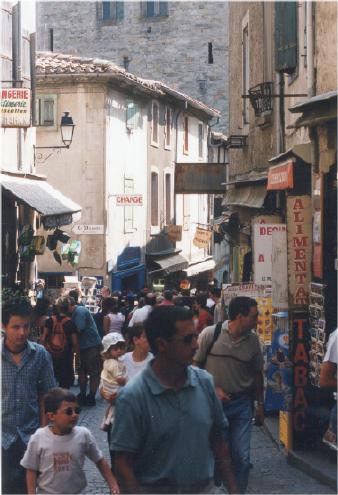
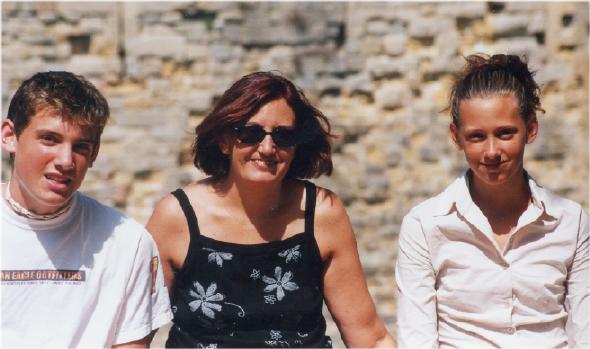
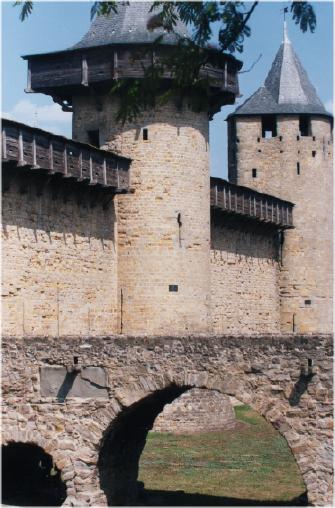
Deb and kids in Carcassone.
This was one of our few
sunny days in the south, which was alas atypically chilly while we were
there.
We ate some great (expensive)
food in Carcassone including the famous regional dish, cassoulet.
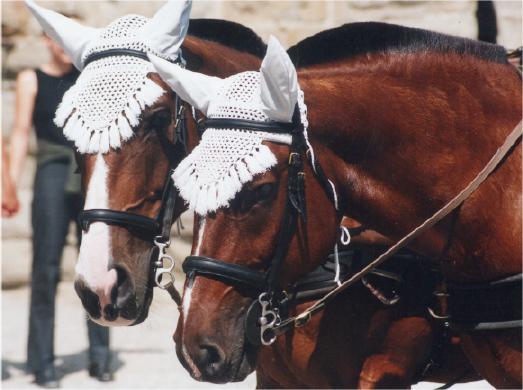
This is how they dress up
the horses in Carcassone.
There are lots more pictures
of Le Cité on Willem
and Marga's site.
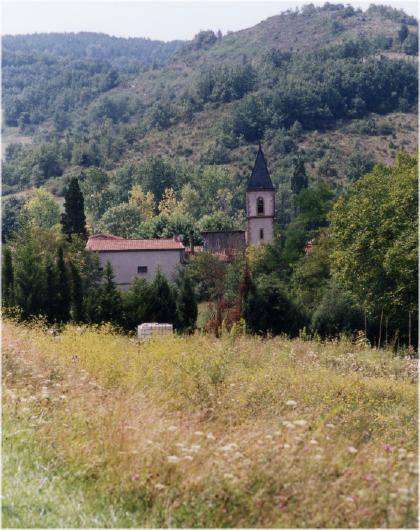
Typical rural scene.
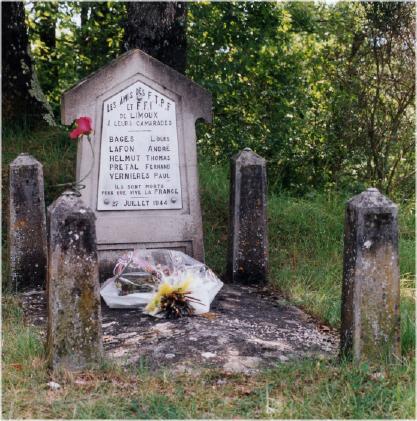
Memorial for five local
men killed during World War II.
"They died so France may
live."
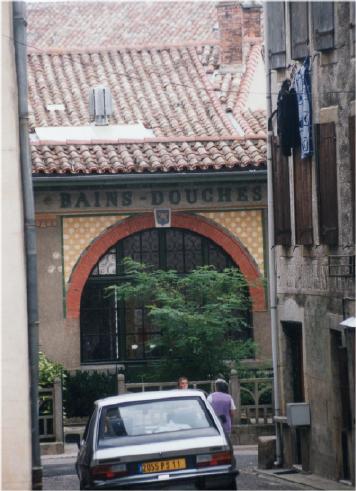
Entrance to old baths/showers
in non-touristy Chalabre.
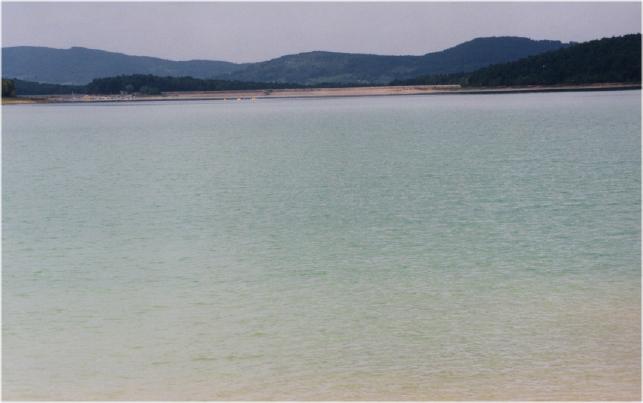
Beautiful Lac Montbel outside
Chalabre, where we went swimming.
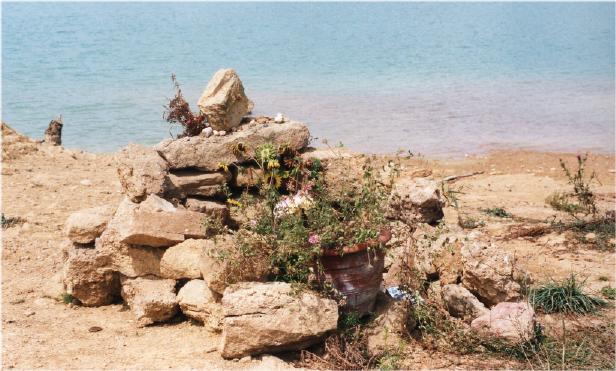
A boy Tim's age had apparently
drowned in the lake just a few weeks before our visit.
This is a shrine built to
him. His picture was inside the rocks, mounted in plastic, along with candles
and flowers.
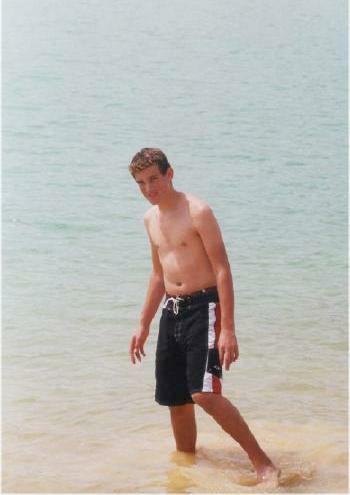
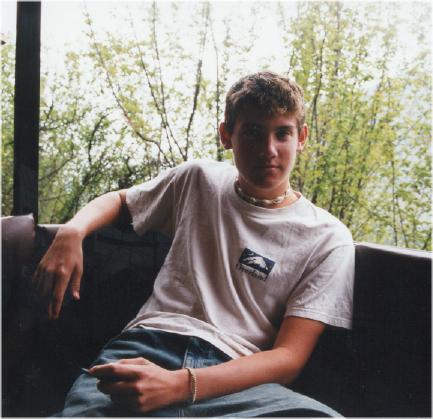
Tim at the lake. |
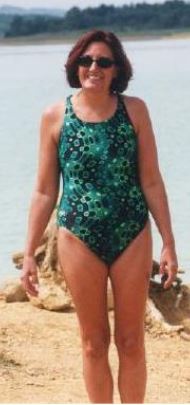
Deb at the lake. (Robijn already in the water.) |
Tim on the little "train"
that took us to the entrance to Europe's largest once-inhabited cave,
Lombrives,
a half hour from Escueillens.
It
takes five days to walk the entire cave.
We just took the 90-minute
tour but it was very cool.
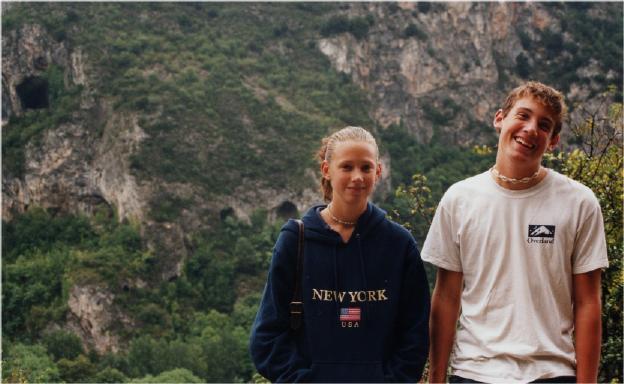
Liese and Tim with cave
entrances in the background.
It was great to see the
outside world again after we emerged, lemme tell you.
One day we drove over the
beautiful Pyrenees Mountains through Andorra into Spain,
or more specifically Catalonia,
the Spanish province of which Barcelona is capital.
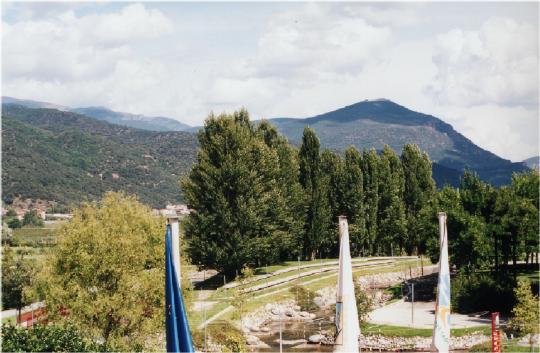
This is part of the Olympic
Park built for the 1992 Barcelona Olympics. It's where they held the kayaking
competition.
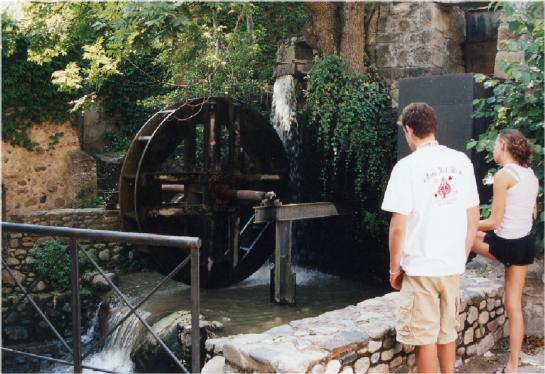
Kids admiring a water wheel
in Catalonia.
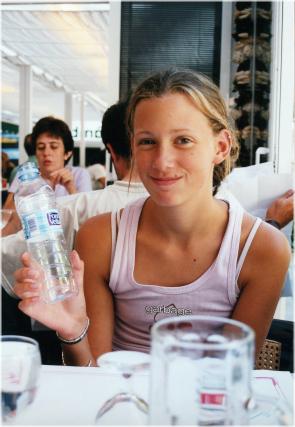
Liese enjoying another water
without bubbles
(she can say that in many
languages!)
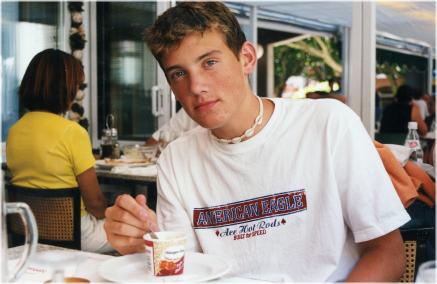
Tim eating Haagen-Dazs in
Catalonia. The kids thought they could use their Spanish in Spain
but found out everything
in Catalonia is in Catalan, which looks like Spanish and French all mixed
up.
.
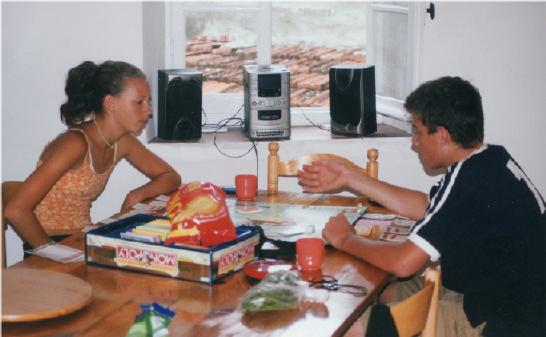
Back in the house in Escueillens,
the kids played a lot of Monopoly.
More of those spectacular
sunflower fields.
The farmers will harvest
the seeds for their oil; the flowers are just a beautiful by-product!
Total eye candy.
(Photo credit both sunflower
photos: Liese)
On to Paris
On to Amsterdam
On to Brabant
Back to THP